At Busy Bees, we believe that nurturing a child’s natural curiosity about animals is an essential part of early childhood education. Research shows that children have an innate biological connection with animals, and by fostering this bond, we create meaningful opportunities for them to appreciate the world around them.
This affinity for the natural world is apparent when we observe children’s excitement about animals and their strong desire to interact with them. The bonds that children form with pets and their fascination with all things related to nature can create valuable opportunities to build important life skills.
Understanding the role of Animals in Early Childhood
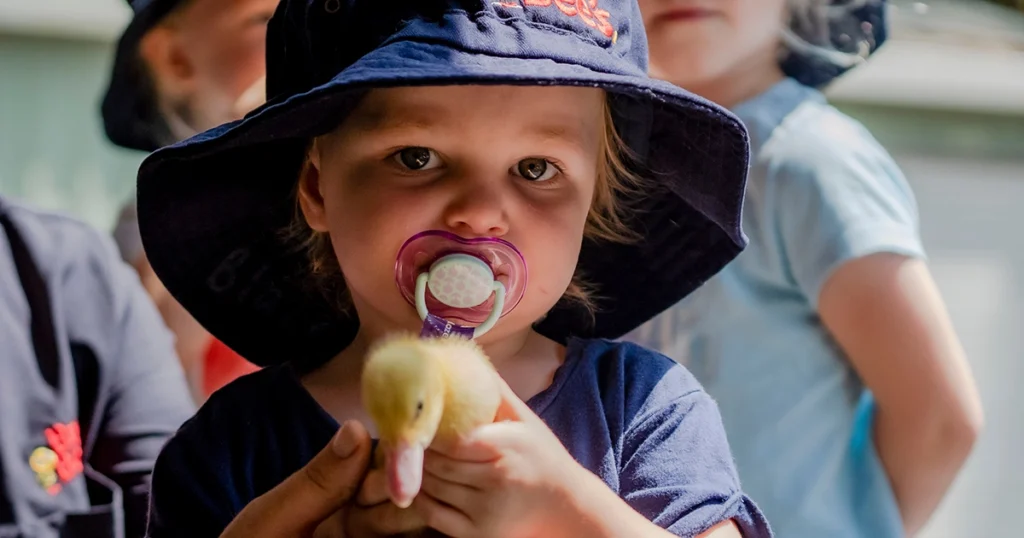
Studies show that children who interact with animals in early childhood develop greater empathy, self-esteem and social skills. Whether it’s watching a butterfly flutter by or gently petting a classroom animal, these moments provide valuable insight into the role of nature play in children’s development. The benefits of learning about animals for toddlers and kindergarten-aged children go far beyond simple fascination; they teach care, respect and kindness towards all living things.
By integrating animals and natural materials in childcare, educators can create nurturing environments that strengthen emotional well-being and foster a lifelong connection with nature and learning. Such interactions align with the standards set by the Australian Children’s Education and Care Quality Authority (ACECQA).
Developmental Benefits of Animals In Early Childhood
There are numerous benefits of learning about animals for toddlers, pre-schoolers and kindergarten-aged children. From learning animal names and sounds to understanding how living things grow and move, there are numerous opportunities for children to build knowledge, confidence, empathy and curiosity.
Learning About Animals
Knowledge of animals helps children build language, observation and thinking skills as they explore names, sounds, behaviours and habitats. These experiences engage curious young minds, developing new memories, communication skills and problem-solving strategies.
The benefits of animals for children’s development have a psychological side, too, helping toddlers understand where food comes from, how to care for animals and the importance of treating living things with kindness. It’s a simple, grounded and engaging way of connecting children with the wider world.
Exposure to Animals Helps Build Emotional Intelligence and Social Skills
“The animal is a conduit for learning to be human: some propose that it is only through the animal that we recognise our humanity.” – June Bone (2013)
Contemporary thinkers such as Bone (2013) consider the animal as the “fourth teacher” in early childhood development, acknowledging the importance of caring for and simply being with animals in developing children’s sense of empathy, responsibility and belonging within their world. Whether it’s feeding a guinea pig, observing insects in the garden, or learning about farm animals, these experiences help children build meaningful connections with the world around them.
The importance of learning about animals in early childhood cannot be denied. Research shows that children who interact with them tend to be more responsible, patient, and cooperative. Furthermore, the presence of animals in an early learning environment can also reduce stress, improve mood, and provide comfort, particularly for children with additional needs such as Autism Spectrum Disorder (ASD).
Exposure to Animals Promotes Learning and Development Growth
How Busy Bees Educators create meaningful animal interactions
At Busy Bees, we understand the importance of learning about animals in early childhood. Many of our childcare locations offer animal experiences that support children’s learning and role models’ appropriate behaviours and relationships with animals.
- Educators model respectful behaviour and guide children in observing and interacting with animals safely.
- Children are supervised at all times during their interactions with service pets.
- Educators model and enforce appropriate hygiene and safety practices, such as washing our hands before and after touching an animal.
- Educators consider and respect the ages, skill levels and preferences of individual children and provide appropriate experiences.
- Where the centre has a dedicated barnyard or farm on-site, we employ experienced farmers and rangers who are responsible for their care. Children are offered opportunities to assist in the daily care of the animals, closely supervised by rangers and educators.
- Bush Kinder programs are offered where centres have suitable natural bushland nearby, where children are encouraged to safely explore and learn about the natural world in their own backyards.
- We encourage visits from veterinary and wildlife experts, to help children learn about safety around animals and respect for our natural Australian wildlife.
- Educators build on the children’s interest in animals to extend their learning about sustainability and caring for their environment.
- We consult appropriately with families regarding animal experiences and service pets.
By incorporating animals into early childhood education settings, we lay the foundation for future learning environments where children learn to care for animals, as well as learn to care for peers and their environment. This holistic approach to education brings a sense of community and belonging where children can thrive.
Find a Busy Bees Early Learning Centre near you and book a tour to learn more about our comprehensive programs, nurturing learning environments and holistic approach to helping children explore the world around them. Contact us today.