
Image: Busy Bees at Heritage Parc
With Australia’s glorious weather, it’s always a good time to get outside and explore, and there’s nothing more exciting than spending time splashing and frolicking in the water!
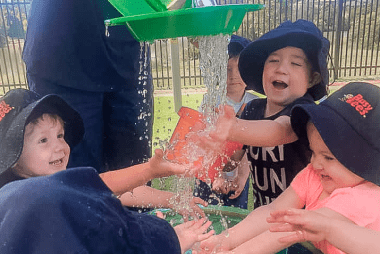
Water play’s benefits extend beyond keeping your child feeling cool. You may be surprised to learn that it contributes to various milestones, from the development of fine motor skills to cognitive growth, social interaction and emotional regulation. It’s one of the most popular activities in early childhood education, combining a fun learning environment with skills that contribute to important developmental milestones. In this article, you’ll discover the various ways water play benefits growing children.
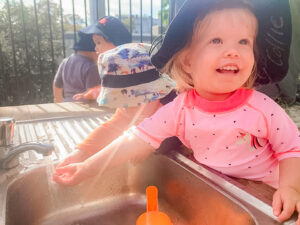
Image: Busy Bees at Everton
What is Water Play?
As the name suggests, water play involves activities that use water alongside tools that allow children to splash, scoop, pour and submerge. Water play’s sensory benefits are a cornerstone of early childhood exploration, where children learn by doing. Your child could be dropping ice cubes into water and watching them melt, or feeling the squishy texture of water beads.
One of the main benefits of water play is the endless opportunity it provides for growth and development in infants, babies and toddlers. Moreover, water play supports critical areas of pre-kindy development. It encourages children to express their creativity and imagination, leading to rich exploratory learning experiences with language and key social and emotional developments.
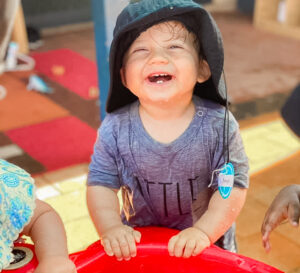
Image: Busy Bees at Kalgoorlie
Water Play Benefits: Enhancing Physical, Social and Emotional Skills
Young children can learn a lot from even a gentle introduction to water sensory play, such as feeling water trickle over their hands. In early learning settings, water play usually involves a water table or large tub where children can stand around and engage in interactive play. Water play’s benefits for babies include touch-, sight- and sound-based stimulation. Social development becomes one of the key benefits of water play for toddlers, as they learn to share, communicate and cooperate while splashing and experimenting with different water textures.
Here are more ways water play can benefit physical and social-emotional growth:
1. Water play develops motor skills and hand-eye coordination
Water play activities help children develop both fine and gross motor skills while improving hand-eye coordination. Actions like lifting, pouring, carrying and squeezing strengthen the small muscles in a child’s hands, which are important for everyday tasks such as writing, drawing and self-care. These playful movements also support physical coordination as children learn to control their actions and interact with objects in their environment.
2. Water play introduces scientific concepts
As children use water play materials, they are exposed to concepts of numeracy, weight and volume. Children develop practical life skills through activities like counting how many buckets of water it takes to fill a tub or observing the weight of an object by seeing how much liquid is displaced when added to a bucket of water.
3. Water play enhances concentration and focus
Have you ever found your child completely immersed in an experience? When children engage in water play, they tend to lose themselves in the activity and can spend long periods exploring and playing. This teaches the child to focus, and any activity that holds a child’s attention for a long time will increase their attention span and ability to concentrate. This is particularly beneficial for formal learning. As your child prepares to start school, being able to concentrate in a classroom will become vital.
4. Water play stimulates sensory exploration
Water play encourages children to explore their senses through hands-on discovery. As they splash, scoop and experiment, children experience different textures, temperatures and materials. Adding elements like sand, ice or soap introduces new sensory experiences, from gritty and squishy to slippery and cool. These activities help children learn about the world around them while supporting curiosity, creativity and exploration.
5. Water play builds social skills
One of the biggest benefits of water play is the social interaction it can foster. While it can be a solitary activity, children find it a great way to engage with each other in a group setting. It’s not uncommon to observe kindergarten children work together to turn their water play into a shared experience with a common goal. For example, children may embark on a mission to build a water structure in the sandpit or take turns jumping into the water to see who can make the biggest splash. In these play experiences, every child has a role to play. This fosters crucial social skills benefits by teaching children how to take turns and communicate effectively, laying a foundation for successful social interactions in the future.
6. Water play’s sensory benefits foster emotional development
There are surprising benefits of water play for emotional and sensory development. Engaging in water sensory play allows children to express and manage their emotions in a healthy way. For example, the calming benefits of splashing water can be a fun way to release pent-up energy. This helps children understand and regulate their emotions better.
7. Water Play encourages empathy
Water play encourages children to consider the feelings and needs of others. For instance, taking turns with water toys or sharing a water table can help children develop empathy and understanding. They learn to recognise and respond to the emotions of their peers.
8. Water Play helps children with self-regulation skills
Water play helps children develop self-regulation skills, such as controlling impulses and managing frustration. For example, waiting for a turn to use a water toy or taking a break from water play can help children practice self-regulation. These skills are crucial for their overall emotional development.
9. Water Play has therapeutic benefits
Water play can be a therapeutic activity for children, providing a calming and soothing experience. This can be especially beneficial for a child with anxiety or sensory processing issues. The gentle flow and sound of water can create a relaxing environment, helping them feel more at ease.
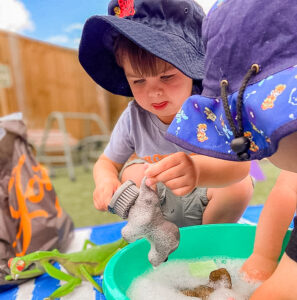
Image: Busy Bees at Burpengary East
How to Enjoy Water Play at Home
Creating a water play area at home is a fun and easy way to provide your child with an engaging and educational experience. Here are some tips and ideas for setting up a water play area at home:
-
Choose a Safe Location:
Select a location that is safe and accessible for your child. A flat, smooth surface is ideal for water play. Ensure the area is free from hazards and has good drainage to avoid any slips or falls.
-
Use a Water Table or Container
A water table or large container is perfect for water play. You can also use a kiddie pool or a large tub. These items provide a contained space for your child to explore and play with water.
-
Add water toys and accessories
Add a variety of water toys and accessories to enhance the play experience and provide opportunities for learning and exploration.
Some examples of materials you can incorporate in water play are:
- Cups and containers of different sizes
- Spades and buckets
- Toys and objects that will sink or float
- Funnels, bottles or eye droppers (to transfer water between containers)
- Natural materials such as sand, flowers, leaves and pebbles
- Squeeze bottles
- Paint brushes
- Sieves or containers with holes
-
Incorporate Sensory Stimulation
Incorporate sensory stimulation with water beads, sand or rice to add texture and interest to the water play area. This touch-based perception can help develop your child’s sensory processing skills and keep them engaged for longer periods.
-
Provide Adult Supervision
Always supervise your child during water play to ensure their safety. Supervision also allows you to guide and interact with your child, enhancing the learning experience.
Key Takeaways
Whether at home or in early learning settings, providing opportunities for water play fosters creativity, learning and social growth. With proper supervision and simple setups, parents and educators can both enjoy the benefits of water play as a rewarding and enriching part of a child’s development journey.
Growing Development with Water Play at Busy Bees
Water play’s sensory benefits are directly linked to the many ways children learn, explore and grow. At Busy Bees, our experienced educators understand how play-based activities support important developmental milestones while keeping children curious and engaged at our childcare locations across Australia. Through carefully designed learning experiences that include sensory activities like water play, we help children build confidence, creativity and essential life skills.
Contact us to learn more about how our centres support your child’s learning and development every day.